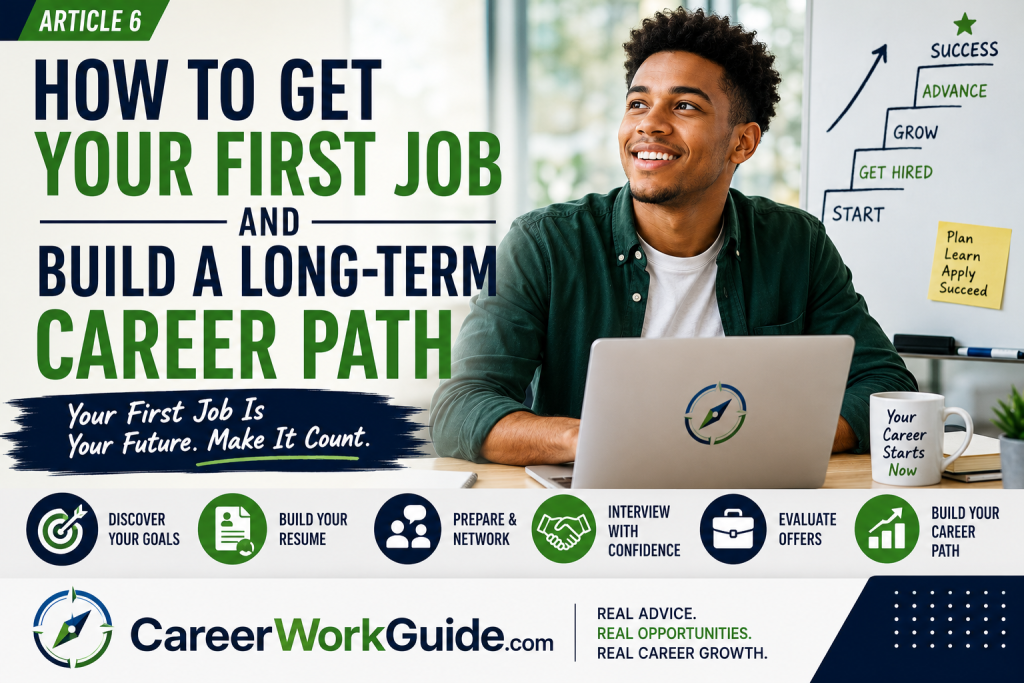
Being qualified is only half of the career-building equation. The next challenge is turning your skills, education and experience into an opportunity—and then turning that opportunity into meaningful career progress.
You can have the right degree. You can complete the right certification. You can develop valuable skills. You can even build an impressive portfolio. And still struggle to get hired.
That is because being qualified and being hired are not the same thing.
Employers have to decide not only whether you can perform the work, but whether your application demonstrates a credible match, whether you communicate effectively, whether you understand the role, and whether you appear likely to contribute to the organization.
Recent research from Jobs and Skills Australia illustrates this distinction. Its analysis found that employers tend to emphasize relevant skills, experience and qualifications during the application stage, while the interview stage places greater emphasis on factors such as approach and attitude to work, cultural fit, communication and interpersonal skills. (Jobs and Skills Australia)
That means the transition from learning → employment requires its own strategy. And getting your first job should not be viewed as the end of your career preparation.
It is the beginning of your opportunity to build something more valuable:
Experience + Skills + Achievements + Relationships + Reputation.
That is what we mean at CareerWorkGuide when we talk about building career capital.
1. Understand What Employers Actually Look For
One of the biggest mistakes job seekers make is thinking employers are simply looking for people who meet every requirement on a job description. Hiring is more complicated than that.
An employer is ultimately trying to answer several questions:
- Can this person do the work?
- Do they have enough relevant knowledge or experience?
- Can they learn what they don’t yet know?
- Can they communicate effectively?
- Do they understand what the role involves?
- Will they work well with others?
- Do they appear genuinely interested in the opportunity?
- Can they demonstrate evidence rather than simply make claims?
Jobs and Skills Australia’s research provides a useful illustration. At the application stage, employers reported looking for relevant experience and skills, qualifications and licences, availability, communication/interpersonal skills and willingness to learn. At interview, emphasis shifted toward approach and attitude to work, cultural fit, skills and experience, communication and interpersonal skills, and personal values. (Jobs and Skills Australia)
This gives you an important lesson:
Your application needs to demonstrate competence. Your interview needs to bring that competence to life.
Don’t Try to Look Like Someone You’re Not
Especially when applying for your first job, you may feel pressure to exaggerate your experience. Don’t.
Instead, learn how to present your actual experience more effectively. Your evidence can come from:
- University or college projects
- Apprenticeships
- Internships
- Volunteering
- Freelance work
- Part-time jobs
- Student organizations
- Community projects
- Personal projects
- Previous employment
- Relevant training
CareerOneStop, the U.S. Department of Labor’s career resource, recommends identifying knowledge, skills and abilities, researching employers, networking, tailoring résumés, building portfolios and preparing for interviews as interconnected parts of an effective job search. (CareerOneStop)
Your objective is not to convince an employer that you have 10 years of experience when you have six months.
Your objective is to make the employer understand what you can already contribute and why you are worth considering.
2. Build a Résumé That Shows Evidence
Your résumé is not your autobiography. It is a marketing document designed to help an employer quickly understand your relevance to a specific opportunity.
The UK’s National Careers Service describes a CV as a summary of your skills, achievements and experience used to apply for jobs and recommends making it clear, concise, readable and tailored to the opportunity. (National Careers Service)
That last point is particularly important.
Don’t Use One Generic Résumé for Everything
Imagine you’re applying for: Marketing Coordinator and Customer Success Associate
You might have transferable experience relevant to both. But the emphasis should change.
For the marketing position, you might highlight:
- Content creation
- Social media
- Analytics
- Campaigns
- Research
For customer success, you might emphasize:
- Customer communication
- Problem-solving
- Relationship management
- Product knowledge
- Conflict resolution
The underlying experience may be the same. The presentation should be different.
The Australian government’s Australian Jobs 2026 guidance similarly advises job seekers to research the business and position and write applications specifically for each job.
Show What You Did—and What Happened
Weak résumé statement: ‘Responsible for social media.’
Stronger: ‘Managed social media content across three platforms and developed weekly content schedules to improve audience engagement.’
Even better when you have legitimate measurable evidence: ‘Increased organic social engagement by 28% over six months through a redesigned content schedule and audience-focused posts.’
You don’t need impressive numbers for every achievement. But whenever possible, show:
Action → Skill → Result
That gives the employer something concrete to evaluate.
Your Résumé Should Answer One Question
After reading it, the employer should be able to answer: “Why should I interview this person for this particular role?”
If the answer isn’t obvious, your résumé needs work.
3. Create a Professional Online Presence
Today, your professional identity can extend beyond the résumé you submit. Depending on your field, employers may encounter your:
- LinkedIn profile
- Portfolio
- Professional website
- Published work
- GitHub profile
- Professional social media
- Industry contributions
- Online projects
This does not mean you need to become an internet celebrity. It means your online presence should support the professional identity you’re trying to build.
The UK’s National Careers Service specifically recommends using LinkedIn to showcase skills and accomplishments and includes online professional presence as part of its job-search guidance. (National Careers Service)
LinkedIn’s own job-search guidance also recommends keeping your profile current, specifying the types of roles you are interested in, highlighting relevant skills and using job alerts when searching for opportunities. (LinkedIn)
Start With the Basics
Your professional profile should clearly communicate: Who you are → What you do → What you can offer → What you’re looking for
For example: Entry-Level Data Analyst | Excel, SQL & Data Visualization | Turning Data Into Clear Business Insights
That is more useful than: Recent Graduate Looking for Opportunities
The first communicates a professional direction. The second communicates a need.
Make Your Online Presence Consistent
Your:
- Résumé
- LinkedIn profile
- Portfolio
- Professional email
- Interview introduction
should tell essentially the same career story.
You don’t want your résumé to position you as a financial analyst while your LinkedIn profile looks like you’re pursuing graphic design and your portfolio contains unrelated work.
Your professional identity should become increasingly coherent as your career develops.
4. Build a Portfolio When Appropriate
Not every career needs a portfolio.
A graphic designer almost certainly benefits from one. A software developer can demonstrate code and projects. A writer can provide published work. A data analyst can show analyses and dashboards. A marketer can demonstrate campaigns and research. An architect can show designs. A consultant can present carefully anonymized case studies.
But even outside traditionally portfolio-driven professions, evidence of work can strengthen your candidacy.
CareerOneStop defines a portfolio as a collection of work samples demonstrating skills and qualifications and notes that portfolios can provide evidence of work, illustrate abilities and show work quality. (CareerOneStop)
Your Portfolio Doesn’t Need to Be Complicated
Start with three to five strong pieces. For each project, explain:
- The Problem: What were you trying to solve?
- Your Role: What did you personally do?
- Your Approach: How did you solve it?
- The Skills: What capabilities did you use?
- The Result: What happened?
- What You Learned: What would you do differently next time?
This turns a collection of files into a career story.
And if you have little professional experience, projects can help demonstrate that you can apply what you’ve learned.
5. Find Jobs Beyond Traditional Job Boards
Job boards are useful. But don’t make them your entire job-search strategy.
CareerOneStop’s U.S. job-search guidance includes online job banks, job fairs, recruiters, networking, targeted searches and identifying local employers as different routes to finding opportunities. (CareerOneStop)
Canada’s Job Bank similarly encourages job seekers to combine job searching with networking and staying connected to their industry. (Job Bank)
That matters because opportunities can appear in different places. Consider:
Company Career Pages
If you know which organizations interest you, visit their careers pages directly.
Professional Associations
Industry associations can provide:
- Events
- Job listings
- Training
- Networking
- Mentorship
- Industry information
Recruiters
Recruiters can be useful for certain occupations and industries, particularly where specialized hiring is common.
Career Fairs
Don’t attend simply to collect brochures. Set a goal.
For example: “I will speak with three employers and learn what skills they want from entry-level candidates.”
The UK’s National Careers Service recommends preparing your CV, updating your LinkedIn profile, researching employers, preparing questions and setting realistic networking goals before attending careers fairs. (National Careers Service)
Direct Employer Outreach
Sometimes you can identify companies you want to work for even when they haven’t advertised the exact role you want. Research the company. Identify relevant teams. Find an appropriate professional contact. Then make a concise, respectful introduction.
The objective isn’t to demand a job. It’s to start a professional conversation.
6. Use Networking Strategically
Networking has a bad reputation because many people imagine it means walking into a room and asking strangers: “Can you get me a job?” That’s not networking.
Good networking is relationship building. Canada’s Job Bank describes networking as building long-term professional relationships that can provide information, ideas, referrals, mentorship and job opportunities. It also notes that some vacancies are filled informally rather than through public advertising. (Job Bank)
The UK’s National Careers Service similarly identifies friends, family, classmates, colleagues, recruiters, employers, volunteering contacts, social-media connections and professional communities as potential parts of a career network. (National Careers Service)
Start With People You Already Know
You don’t need 5,000 LinkedIn connections. Start with:
- Former classmates
- Professors
- Former colleagues
- Managers
- Internship supervisors
- Friends working in your target industry
- Alumni
- Professional association members
Then expand.
Ask Better Questions
Instead of: “Can you help me find a job?”
try: “I’m exploring entry-level roles in cybersecurity. What skills do you see employers asking for most often?”
Or:
“I’m considering moving into project management. What would you recommend I learn before applying for entry-level positions?”
These questions create opportunities for conversation.
Follow Up
If someone gives you useful advice, thank them.
If they introduce you to someone, acknowledge it.
If their advice helps you secure an interview, let them know.
Networking becomes powerful when it develops into a genuine professional relationship rather than a one-time request.
7. Apply for Jobs You’re Actually Competitive For
One of the biggest job-search mistakes is applying indiscriminately. Submitting 200 applications isn’t necessarily better than submitting 40 well-targeted applications.
The objective is not: Maximum applications.
It is: Maximum relevant opportunities.
Read the Job Description Carefully
Separate the requirements into:
- Must-Have: Requirements you genuinely need to meet.
- Preferred: Capabilities that improve your candidacy but may not be essential.
- Learnable: Skills you could realistically develop after hiring.
Don’t automatically reject yourself because you don’t meet every preferred qualification.
At the same time, don’t apply for positions where you clearly lack a legally required qualification, license or essential technical requirement.
Use a Simple Application Scorecard
Before applying, rate yourself:
| Area | Your assessment |
| Required education | Yes / No |
| Required certification | Yes / No |
| Core technical skills | Strong / Moderate / Weak |
| Relevant experience | Strong / Moderate / Limited |
| Transferable skills | Strong / Moderate / Weak |
| Location/work arrangement | Match / Possible / No |
| Genuine interest | High / Medium / Low |
If you’re a strong or plausible match, apply. If you’re clearly unqualified, invest your time elsewhere.
Keep Track of Applications
Create a simple spreadsheet containing:
- Employer
- Role
- Date applied
- Application link
- Contact
- Interview date
- Follow-up date
- Result
- Lessons learned
This turns your job search into a manageable process rather than a collection of forgotten applications.
8. How to Handle the Interview Process
Getting an interview means you’ve crossed an important threshold. Now the employer wants to understand the person behind the application.
Jobs and Skills Australia’s research found that more than three-quarters of recruiting employers surveyed considered the interview the most important part of the recruitment process. (Jobs and Skills Australia)
That makes interview preparation extremely important.
Research the Company
Before the interview, understand:
- What the company does
- Who its customers are
- What the role involves
- What problems the role might solve
- Recent company developments
- Its products or services
- Its values and working environment
The UK’s National Careers Service recommends reading the job description carefully, researching the company, reviewing your application and preparing examples from your experience before an interview. (National Careers Service)
Prepare Stories, Not Scripts
You shouldn’t memorize 20 perfect answers. Instead, prepare several real examples demonstrating:
- Problem-solving
- Teamwork
- Leadership
- Communication
- Adaptability
- Initiative
- Learning
- Handling difficulty
- Achieving a result
A useful structure is STAR:
Situation → Task → Action → Result
The UK’s National Careers Service recommends STAR for structuring examples in CVs, applications and interviews. (National Careers Service)
Example
Instead of saying: “I’m a good team player.”
say:
“During a university project, our team fell behind schedule. I volunteered to reorganize the task list, clarified responsibilities and created a shared deadline tracker. We completed the project on time and received strong feedback for the final presentation.”
That’s evidence.
Prepare Your Own Questions
An interview isn’t only an examination. You’re also evaluating the employer.
Useful questions include:
- What would success look like in the first six months?
- What are the biggest challenges facing this role?
- How is performance measured?
- What training is available?
- What does the team structure look like?
- How does the role typically develop over time?
These questions can also reveal whether the position fits your longer-term goals.
Don’t Ignore Virtual Interviews
For remote and hybrid roles, interviews may happen by video.
The National Careers Service recommends testing technology, researching the company and role, reviewing your application, preparing examples and having questions ready for video interviews. (National Careers Service)
Treat a virtual interview as a real interview—not a casual video call.
9. Evaluate a Job Offer—Not Just the Salary
Getting an offer can feel like the finish line. It is not. It’s a decision point.
The highest salary is not automatically the best offer. Consider the entire package.
Compensation
Look beyond base salary where relevant:
- Bonuses
- Commission
- Equity
- Overtime
- Retirement contributions
- Other financial benefits
Benefits
Depending on the country and employer, benefits may include:
- Health coverage
- Paid leave
- Retirement plans
- Parental leave
- Professional development
- Insurance
- Employee assistance programs
Growth
Ask: “What could I realistically learn here?”
Look for:
- Training
- Mentoring
- New responsibilities
- Promotion pathways
- Internal mobility
- Professional development
Manager
Your direct manager can significantly influence your day-to-day experience.
Try to understand:
- How they communicate
- How performance is measured
- How feedback is delivered
- How much autonomy you’ll have
Culture
Don’t rely only on the company’s marketing language. Ask people who work there what the environment is actually like.
Flexibility
Consider:
- Remote work
- Hybrid arrangements
- Working hours
- Location
- Travel
- Flexibility around personal commitments
The UK’s government guidance on returning to work recommends thinking carefully about the type of flexibility you need and treating flexible-working discussions as part of evaluating the opportunity rather than making it the sole focus of an application. (GOV.UK)
Responsibilities
Read the actual job description. Does the work match what you want to learn?
Or will you spend most of your time doing tasks unrelated to the career direction you’re building?
Career Trajectory
Perhaps the most important question is: “If I do well here for two or three years, what could this experience qualify me to do next?”
That’s career thinking.
Get the Offer in Writing
Before making major decisions, understand the actual terms of the offer.
For example, UK government guidance notes that unconditional and conditional offers have different legal implications and advises employees to understand the status of an offer before resigning from their existing job. (GOV.UK)
The exact legal rules differ across countries, so readers should consult the relevant employment authority for their jurisdiction.
10. Turn Your First Job Into Career Capital
This is one of the most important ideas in the entire CareerWorkGuide framework. Your first job is not merely a source of income.
It is an opportunity to accumulate:
Experience + Skills + Achievements + Relationships + Reputation
Think of these as your career capital.
Experience
Learn how organizations actually operate. Understand deadlines, customers, systems, meetings, priorities and workplace expectations.
Skills
Become better at the technical and transferable skills associated with your profession.
Achievements
Don’t simply complete tasks. Look for opportunities to create measurable value.
Relationships
Build relationships with:
- Managers
- Colleagues
- Clients
- Mentors
- Industry professionals
Reputation
Become known for something valuable:
- Reliability
- Quality
- Problem-solving
- Communication
- Initiative
- Technical expertise
This can compound over time.
A strong first job can give you evidence that makes your second job easier to obtain. Your second job can give you experience that makes the third more attractive.
And so on.
Australian government career guidance makes a similar point: whether a job is short-term or part of a long-term career plan, employment can provide valuable skills, experience and references for the future. (Jobs and Skills Australia)
11. How to Plan Your Next Career Move
Don’t wait until you’re desperate to leave your job before thinking about what’s next.
Instead, periodically ask:
- What have I learned?: What skills have you developed?
- What have I accomplished?: What measurable results can you demonstrate?
- What problems can I now solve?: This is more important than simply counting years of experience.
- What do employers now pay me for?: Your market value should increasingly reflect your capabilities and results.
- What skills am I missing?: Identify the next gap.
- What opportunities are available?
Look at:
- Promotion
- Internal transfers
- New employers
- New industries
- Remote roles
- Freelance work
- Consulting
- Further education
Career planning is an ongoing process. Canada’s Job Bank, for example, recommends continuing to monitor the labour market, develop skills and maintain professional connections rather than treating career planning as a one-time exercise. (Job Bank)
12. When Should You Change Jobs?
There is no universal rule that says you should leave after one year, two years or five years. The right time depends on your circumstances.
Consider changing jobs when:
Your learning has stalled
If you’re no longer developing and there is no realistic opportunity to expand your responsibilities, your growth may be slowing.
There is no meaningful progression
If you have demonstrated strong performance but there is no path forward, explore alternatives.
Your role no longer supports your career direction
Sometimes a job is good but simply isn’t taking you where you want to go.
Your skills are being underused
Australia’s Jobs and Skills research notes that effective use of people’s skills in employment can support productivity, earnings and job satisfaction, while skills underutilization can create costs for workers and organizations. (Jobs and Skills Australia)
The working environment is fundamentally unsuitable
Compensation matters, but so do management, workload, culture, flexibility and sustainability.
A substantially better opportunity exists
A new role may offer:
- Better learning
- Greater responsibility
- Stronger compensation
- Better alignment
- A stronger career path
But don’t change jobs simply because you’re bored after three months.
Ask:
“Is leaving the best way to improve my long-term position?”
13. How to Move From Entry-Level to Mid-Career
The transition from entry-level to mid-career doesn’t happen simply because you’ve accumulated enough years. It happens when you become capable of taking on more complex problems and greater responsibility.
Early in your career, your goal might be: “Learn how to do the work.”
Later, it becomes: “Become excellent at the work.”
Then: “Solve bigger problems.”
Eventually: “Help other people and the organization perform better.”
Move From Tasks to Outcomes
Early-career: “I prepared monthly reports.”
Mid-career: “I redesigned the reporting process, reduced preparation time and improved the accuracy of monthly reporting.”
The second demonstrates ownership and impact.
Develop Professional Judgment
Technical skills matter. But experience should also teach you:
- What deserves attention
- What can wait
- When to escalate
- How to communicate difficult information
- How to manage competing priorities
- How to make decisions with incomplete information
These capabilities take time to develop.
Become Known for Something
You don’t necessarily need to become a manager. You might become known as:
- The data expert
- The strongest writer
- The cybersecurity specialist
- The project problem-solver
- The customer-experience expert
- The person who can explain complex ideas clearly
Specialization can create professional identity.
Start Thinking Beyond Your Own Tasks
As your career develops, ask: “How does my work affect the wider organization?”
That shift—from completing assigned tasks to understanding and improving outcomes—is one of the foundations of professional growth.
The UK’s Civil Service Operational Delivery Profession, for example, uses skills frameworks to help people compare their current capabilities with those needed for future roles and to structure career progression or lateral moves. (Operational Delivery Profession)
Your First Job Is a Starting Point, Not a Destination
Getting your first job can feel like the moment when your career finally begins. In one sense, that’s true.
But getting hired is only the beginning of another phase. Your career will develop through what you do after the offer.
Will you learn? Will you take responsibility? Will you document your achievements? Will you build relationships? Will you develop skills that remain valuable? Will you understand when to stay and grow—and when to move? Will you continue adapting as your industry changes?
These questions matter because your career is not a sequence of job titles. It’s the accumulation of what each opportunity helps you become.
The U.S. Bureau of Labor Statistics reported that the median tenure of wage and salary workers with their current employer was 3.9 years in January 2024, with the figure varying considerably by age and occupation. (Bureau of Labor Statistics)
That doesn’t mean you should change employers every few years. It means your career should be designed with the understanding that jobs change, employers change and circumstances change.
Your responsibility is to make sure that wherever you work, you are continuing to build something valuable.
The CareerWorkGuide Career-Building Cycle
At this point, the six-part CareerWorkGuide career foundation comes together:
1. Understand Yourself: Identify your interests, strengths, values and goals.
↓
2. Choose a Direction: Explore career options that fit both you and the opportunities available.
↓
3. Research the Market: Understand jobs, skills, qualifications, compensation and outlook.
↓
4. Build Your Skills: Close the gaps between where you are and where you want to be.
↓
5. Get Hired: Present your skills effectively, build relationships and find opportunities.
↓
6. Build Career Capital: Turn employment into experience, skills, achievements, relationships and reputation.
↓
Repeat: Because career development doesn’t stop after your first job.
What Comes Next in Your Career
If you’ve followed this CareerWorkGuide series from the beginning, you’ve now moved through the fundamental stages of career building:
Your career is more than your next job.
- You learned how to think about career decisions as a long-term journey.
- Then you learned how to choose a career direction.
- You explored how to understand your strengths, interests, skills and values.
- You learned how to research a career before committing significant time or money.
- You learned how to identify skill gaps and build capabilities.
- And now you’ve reached the point where those capabilities meet the job market.
But this is only the foundation.
From here, CareerWorkGuide will take these ideas deeper into the practical realities of modern work.
Continue Into the Job Search Pillar
We’ll explore topics such as:
- How to write a résumé that gets noticed
- How to tailor your résumé to a job description
- How to write effective cover letters
- How to use LinkedIn for job searching
- How to prepare for interviews
- How to answer difficult interview questions
- How to negotiate salary
- How to find jobs that aren’t publicly advertised
- How to avoid job-search scams
- How to build a job-search strategy
Then Into Remote Work
For people pursuing flexible careers, we’ll explore:
- How to find legitimate remote jobs
- Remote-friendly career paths
- Remote résumés
- Remote interviews
- Working across time zones
- Remote productivity
- Remote career progression
And Into Workplace Growth
Once you’re employed, the questions change:
- How do I succeed?
- How do I earn more responsibility?
- How do I get promoted?
- How do I handle difficult managers?
- When should I negotiate my salary?
- How do I build a professional reputation?
That’s where the Workplace pillar comes in.
Final Thought: Don’t Just Get a Job. Build Your Position.
Your first job doesn’t need to be your dream job. It doesn’t even need to be perfect. What matters is whether it helps you move forward.
If you can leave your first role with:
- more skills than you started with,
- more experience than you had before,
- more achievements you can demonstrate,
- more professional relationships,
- and a stronger reputation,
then you’ve gained something far more valuable than a job title. You’ve built career capital.
And that is the bigger idea behind CareerWorkGuide: Don’t measure your career only by the jobs you get. Measure it by the capabilities, opportunities and professional value you build along the way.
Your first job is the beginning. What you build from it is your career.
CareerWorkGuide Career Series
← Previous: How to Build the Skills You Need for Your Career
You are here: How to Get Your First Job and Build a Long-Term Career Path
Next: How to Write a Résumé That Shows What You Can Do